Microcement in Canada: The 2027 Outlook
Where seamless architectural surfaces are heading, which design trends matter, and how to evaluate the world's leading microcement manufacturers.
By TOPFINISH Right Inc. · · 7 min read
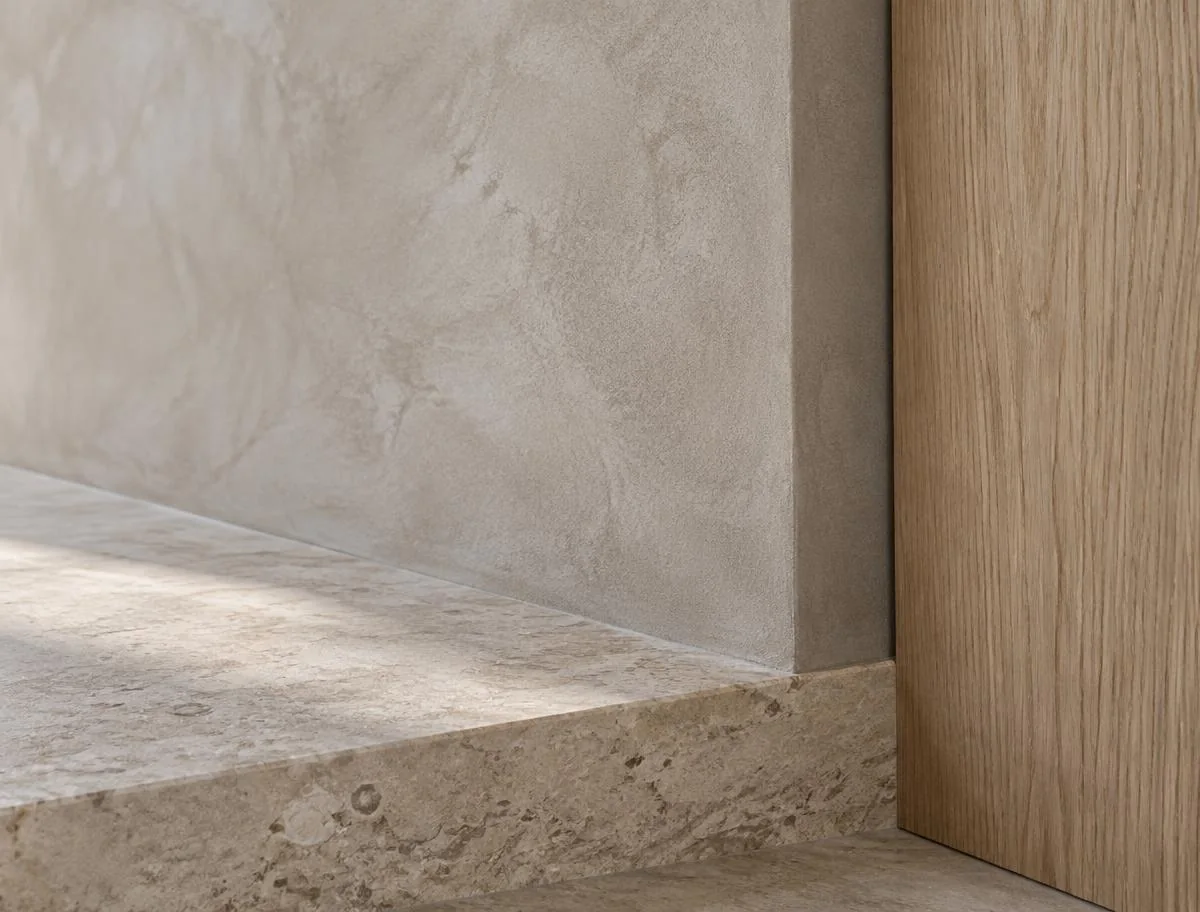
A designer sketches a seamless shower: one warm mineral surface from floor to ceiling, no grout lines. The installer's first question is not about colour. It is: what lies beneath?
That exchange captures where microcement in Canada is heading. The opportunity is not a fashionable coating sold on photographs; it is a crafted surface that can be specified, prepared and installed with confidence. The numbers below explain the context—and why they cannot, on their own, tell you how big that opportunity is.
Why a 3 mm finish changes the conversation
Microcement is a thin decorative finish, often around 2–3 mm depending on the system, applied to suitably prepared walls, floors, stairs and built forms. Hand-trowelled, it adds quiet variation, removes the visual rhythm of grout lines and lets one material language run from floor to wall to vanity.
That continuity is the appeal—and the reason it is demanding. "Seamless" describes an appearance: structural movement joints still need detailing, and the finish is not a substitute for code-required waterproofing or a structural layer.
So the opportunity in Canada is selective, not universal. The right first question is whether the complete system suits the room, not whether an inspiration photo can be copied. Our applications overview is a good place to start.
What the figures do (and don’t) tell us
Start with the honest gap: there is no reliable, publicly available Canadian microcement-only market size. What we have are broader figures that describe the climate around it.
Renovation activity. The CHBA Spring 2026 Renovation Market Index puts annual nominal residential renovation output at roughly CAD 80 billion, broadly flat since 2023. Nominal means current dollars, not inflation-adjusted, and this covers all renovation—not microcement installations.
Renovator sentiment. The national index sat at 50.3, near the neutral 50, while Ontario was 40.1—a noticeably tougher reported climate here. The subindex for one- or two-interior-room renovations was 65. These are survey readings of business conditions, not household intentions or orders.
Decorative concrete. A MarketsandMarkets report (August 2026) estimates Canada's decorative concrete market at USD 853.2 million in 2023, forecasting USD 1,078.4 million in 2028—4.79% CAGR for 2023–2028. That is US dollars, a forecast, and a category spanning stamped, coloured and polished concrete. It is not a microcement growth rate.
The takeaway: renovation money is moving, slowly, towards smaller interior projects—exactly where specifiable finishes compete. Real enquiries and well-assessed sites are better evidence than any borrowed growth figure.
Broad renovation context
~CAD 80 billion
Annual nominal residential renovation output. Not microcement market size.
Source: CHBA, Spring 2026 RMIDecorative concrete forecast
4.79% CAGR
2023–2028, broader decorative concrete. Values reported in USD, not CAD; not microcement growth.
Source: MarketsandMarkets, Aug 2026Five surface trends to watch in 2027
Treat these as design directions with practical questions attached, not predictions about every client.
1. Warm minerals and tactile surfaces
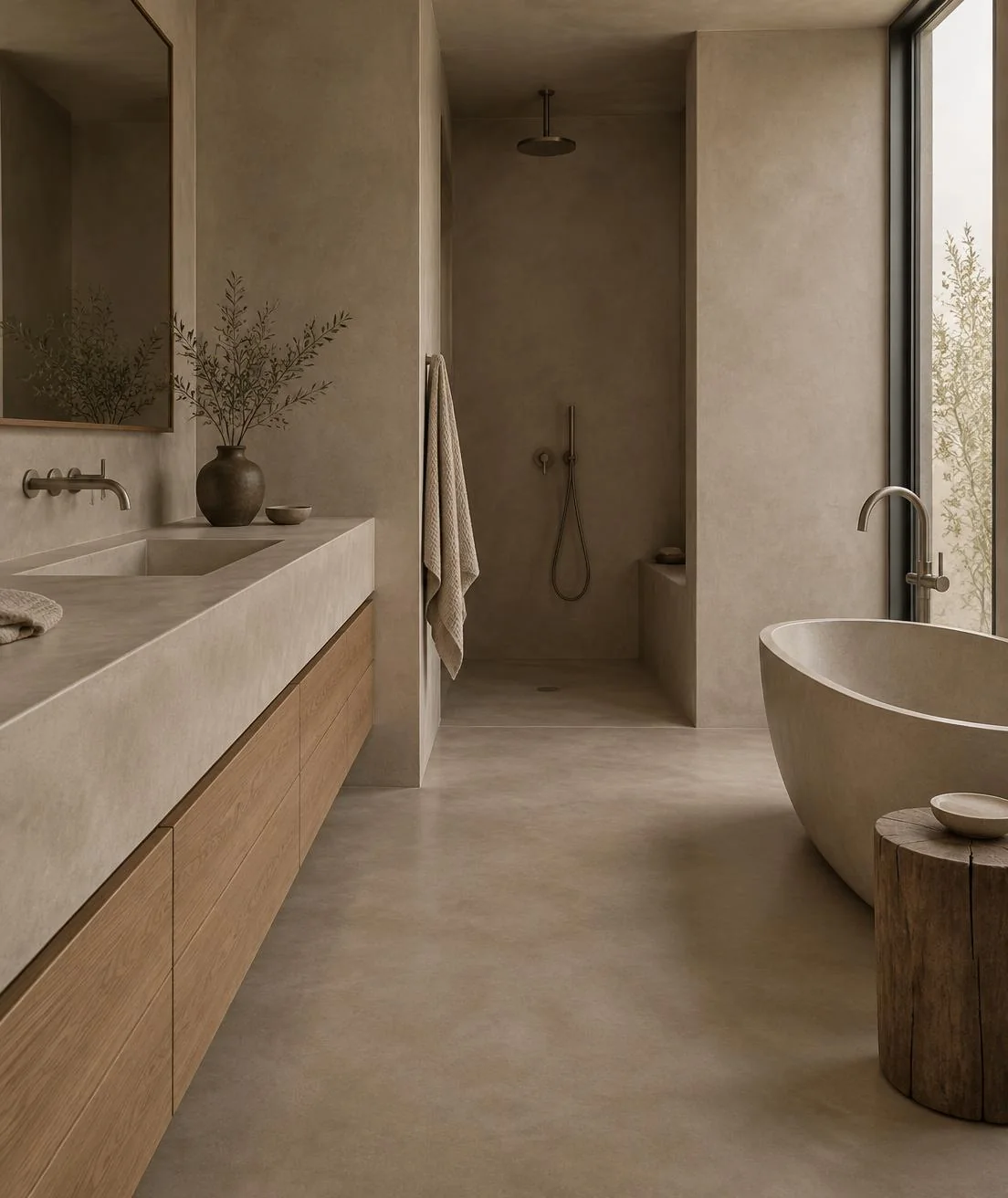
Cream, sandstone, clay and taupe soften crisp cabinetry, glass and metal. The Houzz 2026 U.S. Emerging Summer Trends Report (May 20) reports searches for Venetian plaster up 94%, sandstone up 257% and curved staircases up 66%. Those are U.S. search trends—a signal of interest in texture, not Canadian demand or microcement sales.
Before you choose a colour: view a physical sample beside the real timber, stone and lighting. Browse colours and finishes, then test in the room.
2. Spa-like bathrooms
Fewer material changes give a bathroom a calm, composed feel. But that calm sits on a technical assembly: drainage, penetrations, movement and waterproofing still need detailing. Suitability for a bathroom wall does not establish suitability for a shower floor; review slip resistance, sealer and cleaning products for the actual use.
3. Sculptural curves
Rounded returns, niches and stairs let the finish follow the geometry. Microcement cannot stabilize a flexible or poorly built form, and tight radii test an applicator's skill. A small mock-up of the hardest corner often tells you more than a large flat sample.
4. Boutique commercial interiors
Clinics, restaurants and retail value a distinctive material language, but a quiet consultation room and a busy restaurant entrance face very different abrasion, spills and cleaning. Agree traffic, maintenance and opening schedule before specifying, and confirm performance documents for the chosen assembly.
5. Specification-led finishes
The least visual trend may matter most: making the specification as considered as the mood board. Name the system, not just "microcement"; assign who handles preparation, waterproofing, application and handover. Our professional support brings samples and consultation into that early stage.
How to compare leading microcement manufacturers
There is no objective, verified global number-one ranking: products, regional distribution and installation methods vary too much for a single league table. The five international manufacturers below are worth examining, listed without scores or market shares and described from their own published guides, not head-to-head testing.
How to compare any supplier: request physical samples and current technical data sheets; check which primers, meshes and sealers the system requires; ask what technical support and installer training is available in Canada; and confirm the system is approved for your specific support and use. A recognized name does not resolve a difficult substrate.
Topciment
Spain
A manufacturer of complete microcement systems with technical guidance and training, bringing preparation, decorative layers and protection into one specification. Topciment is TOPFINISH’s material partner in Toronto—a disclosed relationship, not an independent ranking.
Ask: Which system in the range matches this support and use, and what training applies to it?
Manufacturer’s official guideIdeal Work
Italy
Microtopping is its architectural microcement offering, associated with continuous-looking interior surfaces.
Ask: What do the current system documents specify for this support, application and protective finish?
Manufacturer’s official guideBEAL MORTEX
Belgium
MORTEX is a mineral micro-mortar positioned around design craft and decorative applications. Products informally called microcement are not necessarily interchangeable assemblies.
Ask: How does its material and application method differ from the system you are comparing it with?
Manufacturer’s official guideNovacolor
Italy
Wall2Floor is a seamless-looking surface system for walls and floors, best assessed as a complete build-up rather than a single product.
Ask: What build-up, finishing options and support requirements apply to these exact project conditions?
Manufacturer’s official guideForcrete
United Kingdom
A specialist manufacturer with wet-area-focused systems in its offering. Positioning does not replace project-specific waterproofing design.
Ask: Is any water-resistance claim documented for this particular assembly and installation?
Manufacturer’s official guideWhy TOPFINISH works with Topciment
TOPFINISH Right Inc. is an authorized dealer and partner for premium Spanish Topciment microcement in Toronto. We remain an independent supplier and installer; the relationship implies no exclusivity or ownership.
We chose a defined family of technical systems and a considered colour process over treating the finish as an isolated coating. For designers, that means a clearer path from sample to specification, supply and installation. For homeowners, it means understanding practical requirements before committing to a surface.
Review our microcement materials, or consider Toronto and GTA installation alongside the wider construction programme.
“The opportunity is not simply to sell a fashionable surface. It is to make a technically demanding finish easier for Canadian design professionals to specify confidently.”TOPFINISH editorial perspective
What Canadian buildings ask of the finish
Substrate. The support must be flat, rigid, stable and suited to the system. Existing tile is not automatically acceptable, and a thin coating will not level major irregularities or bridge active cracks. Topciment's support-preparation guidance is a useful starting reference.
Moisture. Investigate humidity and leaks rather than covering them. In wet areas, coordinate the compliant waterproofing assembly with drainage, penetrations and transitions; decorative protection and waterproofing are different jobs.
Heated floors. These need a suitable rigid cementitious substrate and the manufacturer's guidance for the full build-up, including curing and heating protocols. Plan them early with the heating installer and applicator.
Exterior. Freeze–thaw changes everything. Use a system outdoors only where the manufacturer approves that specific application; interior suitability says nothing about exterior durability.
Our view: fewer claims, more confidence
Microcement has a place in selected upscale homes and commercial interiors—not as a wholesale replacement for tile or stone. The best projects choose it for a clear architectural reason: tactile character, a continuous palette or a carefully detailed form. Sometimes the right answer is another material, and a good specification process leaves room for that.
The next phase is about design confidence: physical samples, transparent preparation and a clearly defined system. For Toronto projects, start with the room, the existing support and its intended use—no market forecast can substitute for getting that individual project right.
References & research notes
- CHBA — Spring 2026 Renovation Market Index
- MarketsandMarkets — Canada Decorative Concrete Market
- Houzz — 2026 U.S. Emerging Summer Trends Report (May 20)
- Topciment — Microcement manufacturer and systems
- Ideal Work — Microtopping
- BEAL International — MORTEX
- Novacolor — Wall2Floor
- Forcrete — Specialist surface systems
- Topciment — Preconditions and support preparation
Last researched November 18, 2026. Market estimates cover broader categories; manufacturer descriptions come from their own guides. Confirm current technical documentation for your project before specification.